
How to Photograph an Italian Piazza Without the Crowds
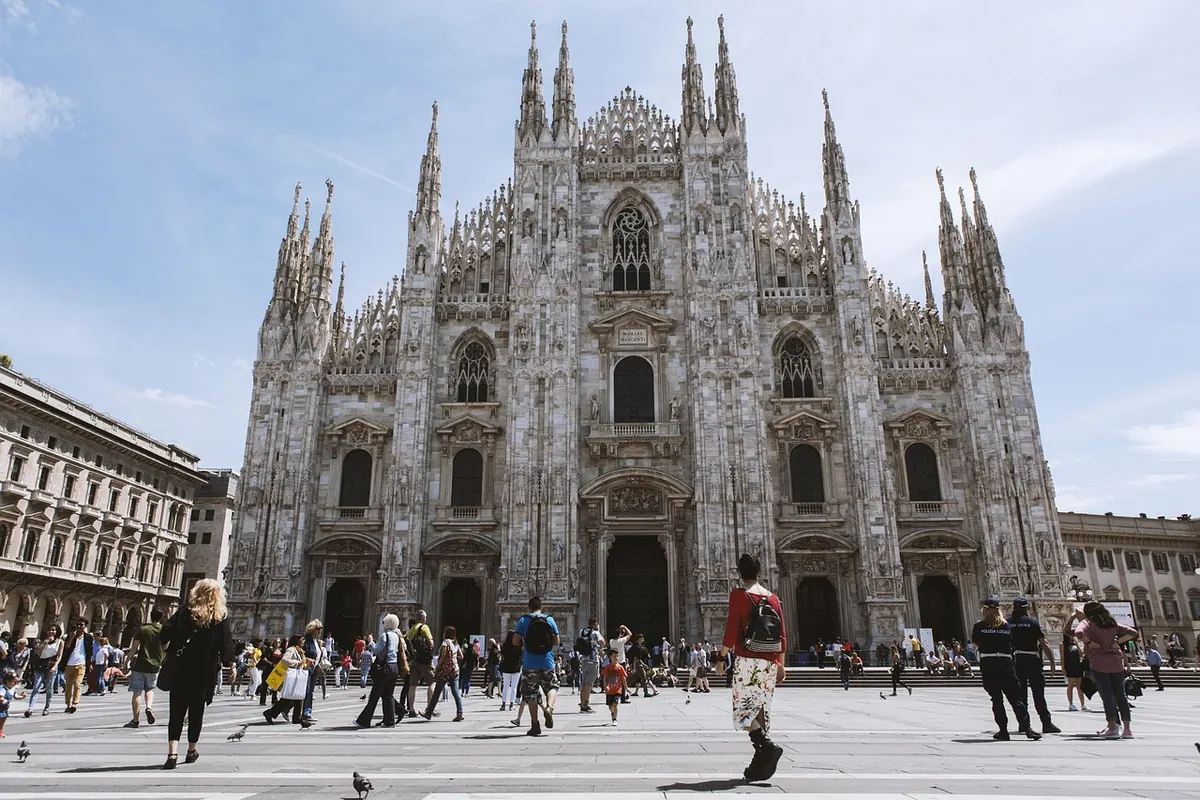
There is a version of the Italian piazza that exists for about forty minutes a day. At half past six the chairs are still stacked against the bar, a waiter is dragging a hose across the stone, and the square belongs to pigeons, two delivery vans and whoever had the sense to set an alarm. By eleven the fountain is a ring of raised phones.
You cannot photograph your way through a crowd. But you can learn when it leaves, where it thins, and how to build a frame that doesn't need it to be gone. Most of that work happens before you press the shutter. The photographers who come back from Italy with clean, breathing pictures of empty squares are rarely luckier than you are — they are simply better informed about a place they may have visited only once.
What follows is not a list of secret spots. It is a way of thinking about a public square as a thing with weather, habits and a pulse, and of arranging your day around that pulse instead of against it.
Read the Square's Daily Clock Before You Plan Anything
Every piazza keeps a schedule, and it is rarely the one in the guidebook. On your first day, walk through at four or five different hours without a camera. You will see the tide turn: groups arrive mid-morning, cluster around the fountain or the cathedral steps, and drift off by late afternoon. The details change from town to town, but the shape of the day is remarkably consistent.
Watch for the local rhythms underneath. A market that packs up at two leaves a square briefly and wonderfully empty in the late afternoon — Campo de' Fiori in Rome goes from shouting to silence in under an hour. A town whose passeggiata starts at six is crowded at seven and quiet at eight, because at eight everyone is sitting down to dinner. In the July heat, Italians vanish between one and four and the piazza belongs to the sun and the pigeons. That is a gift.
Notice the infrastructure of arrival, too. Where do the coaches park? A square that fills at ten past ten is usually a square with a tour bus unloading two streets away, and that bus has a return time printed on somebody's ticket. Once you know when the groups come and go, you know which ninety minutes of the day belong to nobody but the locals.
Notice which way the facades face, as well. A square lit sideways at eight in the morning may be flat and hard by noon, and a west-facing church will glow at dusk. That decides not just when you shoot but which hour is worth shooting at all.
Give a new square three visits before you judge it: one early, one at midday, one in the evening. You will learn more in three twenty-minute walks than in an afternoon of standing around waiting for something to happen.
The Windows Worth Setting an Alarm For
These are the reliable gaps. None is secret, which should tell you how few people bother.
- First light to about forty-five minutes after sunrise. Cool stone, clean air, and the only company is cleaners, bakers and one other photographer. The light is soft and blue-grey, and the square is genuinely yours.
- The lunch hour, roughly one to half past three. In summer this is the emptiest daylight the square will see. Shutters close, chairs go up, and the piazza becomes a set with the lights off.
- The half-hour after the market packs up. Vans pull away, the swept stone still smells of crushed fruit, and for a moment the square looks like it has just been built.
- The twenty minutes after a rain shower. People scatter and stay scattered. You get wet pavement, reflections, and a sky that behaves like a giant softbox.
- The dinner hour, eight to half past nine. The passeggiata has ended, the restaurants have swallowed everyone, and the light is still good enough in June and July.
- Sunday morning before Mass, and Monday morning generally. Both are reliably quieter than a Saturday, and the early Sunday light is often the best of the week.
The Hours That Fool You
Golden hour is the trap. Everyone knows it is beautiful, so everyone turns up for it. A square that was workable at four in the afternoon can be impassable at seven, and the warm light you came for is the exact light that empties every café and fills every step. If you want the sunset and the emptiness, come back at the same hour on a weekday in November, or accept that you will be photographing people and make that the picture instead.
The square is not empty at dawn because it is a secret. It is empty at dawn because almost nobody is willing to be awake for it.
Shoot the Edges, Not the Middle
When you cannot avoid a crowd, stop trying to photograph through it and start photographing around it. Crowds follow geography: they mass in the centre, in front of the fountain, along the sunny side, and on the steps of anything famous. The perimeter of a piazza is almost always yours.
Put a colonnade, an arch or a doorway between you and the square and let it frame the view. A dark vaulted opening with a bright square beyond it removes everything except the slice you choose. Get low against the pavement and the crowd becomes a forest of legs at the top of the frame. Tilt up and you get balconies, washing lines and rooflines that no tour group has ever looked at. Work the corners: a bar table, a stack of chairs, a doorway with a cat in it will carry a picture on their own.
A long lens is a crowd-management tool. Compress the scene against a distant facade and the people in the foreground simply fall out of frame. Conversely, one figure in the distance can rescue a composition — a single person crossing an empty square is often a better photograph than the empty square itself. Wait for the gap and take the shot; if the gap does not come, wait one more minute.
Two Techniques That Empty a Square
These are the practical tricks that earn their place in the bag.
- Long exposure. A ten-stop filter and a thirty-second exposure turns a moving crowd into a soft haze while the stone stays sharp. It works best in flat light and needs a tripod, but it will give you a usable photograph at eleven in the morning on a Saturday.
- Details instead of the whole. A doorknob, a shadow across a step, a menu board in three languages, the corner of a fountain with the water still running — this is how you photograph a place when you cannot photograph the place. Dozens of these make a far better record of a piazza than one more wide shot with forty strangers in it.
None of this requires special access. It requires a willingness to get up early, to walk the same square three times, and to accept that the best frame is often two metres to the left of where everyone else is standing.
Photo: ShenXin / Pixabay