
Autumn in Piedmont: A Slow Travel Guide to Truffles and Villages
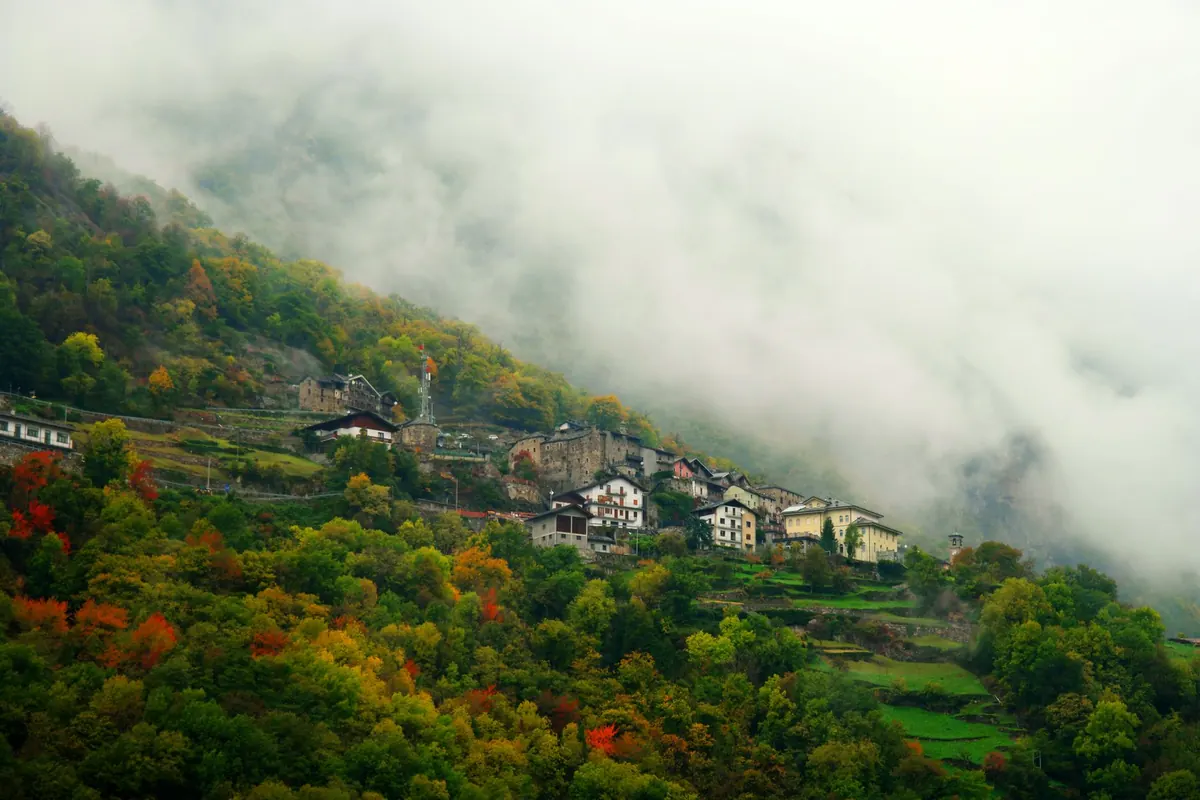
The first fog of October settles in the valley below La Morra and stays there until lunch. The vineyards have turned from green to a soft brass colour, and by mid-afternoon you are drinking coffee outside in a sweater. By evening the air smells of woodsmoke and wet leaves, and somewhere down the hill a dog is barking at nothing in particular. This is the season Piedmont does best. The white truffle is in the ground, the nebbiolo is coming in, hazelnuts are drying in the sheds, and the summer crowds have thinned to something you can walk through. What follows is written for people who would rather spend three hours at a table than three hours in a queue.
The shape of the season
Autumn here has three distinct movements, and knowing which one you are walking into makes a difference.
September is still warm and agricultural. Hazelnut harvest is under way, the Moscato and Dolcetto come in, and the villages are full of people who actually live there. Restaurant menus are transitional — tomatoes at lunch, mushrooms at dinner.
October is the busy month. Nebbiolo for Barolo and Barbaresco is picked, often late in the month, and the white truffle season is properly open. Weekends in Alba become a crush. If you can travel midweek, do it.
November is the reward for anyone who doesn't mind a bit of grey. Fog, shorter days, fewer visitors, calmer dining rooms, and truffles still very much in play. Bring a proper coat and shoes you don't mind getting muddy.
The white truffle itself is unpredictable: the season runs roughly from late September into December, with the best of it usually between mid-October and late November. The most reliable thing you can do is plan the trip around the place rather than the tuber, and treat a good truffle as a bonus.
Truffles: hunting, buying, eating
Going out with a trifolau
You cannot simply wander into a wood with a dog. Truffle hunting is organised around licensed hunters and their dogs, and the ground is private. The practical route is to arrange an outing through your agriturismo, a local tourism office, or one of the food-focused tour operators in the Langhe. Expect an early start, an hour or two of quiet walking behind a dog that knows its job far better than you do, and a hunter who will explain why the best truffles are found where the soil is loose and the oaks are old.
Two etiquette points worth knowing. Keep your voice down and your hands off the dog — it is working. And don't ask to keep what's found; you are a guest at someone's livelihood.
Buying without getting it wrong
Alba's truffle fair is the famous one, but the smaller markets in towns like Moncalvo, Murisengo, Montiglio Monferrato and San Damiano d'Asti are easier to browse and often just as good. A few rules of thumb:
- Smell the whole truffle, not the shavings in a jar. It should be clean, earthy and faintly garlicky — never sharp or ammonia-like.
- Press it gently. Firm is good; soft spots mean it has been sitting.
- Ask where it was found and when. Vendors who know will tell you.
- Small truffles cost less and taste just as good grated over pasta. You do not need a showpiece.
- Never wash it. Brush it, wrap it in paper towel, keep it in a sealed jar in the fridge, and use it within a few days.
Eating it properly
Truffle aroma does not survive heat. The point of the ingredient is the moment of shaving, at the table, over something warm and plain: egg tajarin with butter, a fonduta, a risotto, a fried egg. If a menu offers truffle-flavoured oil or cream, order something else. And in autumn, ask what the kitchen has that day rather than deciding in advance — the dish changes with what the hunter brought in that morning.
Villages worth slowing down for
The famous names deserve their hour, but the pleasure of this region is the five kilometres between them. Some places to build a day around:
- Neive — steep lanes, brick and stone, and one of the best short walks in the Langhe up to the belvedere.
- Barbaresco — small, tidy, with a tower you can climb and vineyards falling away in every direction.
- Serralunga d'Alba — a castle that looks engineered for a fairy tale, and a village that stays quiet even in October.
- Cherasco — baroque streets, snail farming in the surrounding fields, and a market town rhythm that has nothing to do with tourism.
- Pollenzo and Bra — the gastronomic campus at Pollenzo, the Slow Food history in Bra, and a good base for the northern Langhe.
- Nizza Monferrato — the capital of the cardo gobbo, the fat ribbed cardoon that turns up in every proper bagna cauda.
- Canelli — underground wine cathedrals, and a town that feels more working than postcard.
A quieter route through the Monferrato
Most visitors concentrate on the Langhe and Roero, leaving the Monferrato hills to the east surprisingly open. If you have three days and a car, try this.
- Day one. Base yourself around Nizza Monferrato or Canelli. Walk in the morning, taste Barbera in the afternoon, and eat somewhere with a handwritten menu.
- Day two. Drive north through Asti and up towards Moncalvo and Montiglio Monferrato. This is truffle country with far fewer people in it. Stop for lunch, take the long way back, and don't plan the last hour.
- Day three. Head west to Cherasco and Bra, then finish in Pollenzo with a proper sit-down meal. Buy cheese and hazelnuts to take home on the way out.
If you would rather stay in the Langhe, invert the logic: sleep in Monforte d'Alba or Novello, visit Alba on a Tuesday rather than a Saturday, and drive the ridge roads early before the coaches arrive.
What to order, and when
Autumn has its own menu and it is worth following it. Tajarin with butter and truffle, vitello tonnato, bagna cauda with cardoons and peppers, Castelmagno fonduta, brasato al Barolo, and roasted chestnuts with a glass of something sweet. Desserts are hazelnut-heavy — torta di nocciole, amaretti from Mombaruzzo, bonet — and the local Moscato d'Asti is low in alcohol, which makes it a sensible way to end a long lunch.
Practical rhythms: lunch is the main meal and kitchens often close between about 2.30pm and 7.30pm, so do not arrive hungry at four. Fixed menus are common and usually good value. Book ahead for weekends in October, and ask about the truffle dishes separately, since they are often priced by weight rather than listed on the card.
Practical notes for an autumn visit
Fly into Turin or Milan, then take the train to Asti, Bra or Alba — the Alba–Bra line is slow, scenic and useful, and Asti connects to the main network. A car is close to essential for the smaller roads, but the hill driving is narrow, foggy in the mornings and studded with blind bends; drive slower than you think you need to, and skip the second glass of wine.
- Pack layers, a waterproof jacket and shoes with grip. Vineyard paths hold water well into November.
- Book accommodation and weekend lunches several weeks ahead; October fills up in the Langhe.
- Check opening hours before you set off. Many small trattorias close one or two days midweek without much notice online.
- Ask about prices before you commit to a truffle dish or a whole truffle to take home — the range is wide and changes with the weather.
- Keep the last morning free. Fog often lifts around eleven into something worth sitting still for.
One final thing: autumn here rewards the traveller who does less. Two villages a day, one long lunch, an afternoon walk without a destination — that is the version of Piedmont people come home talking about.
Photo: Gildo Cancelli / Pexels